< /center>
سخنران: دکتر نزهت احمدی، دانشیار گروه تار یخ، دانشگاه اصفهان
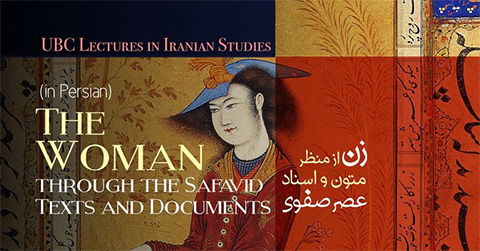
علیرغم اهمیت موضوع سبک زندگی زنان در ایران پیشامد رن، در مباحث تاریخ اجتماعی ایران کمتر به این موضوع پرداخته شده است. زنان در آن دوران چگونه زندگی میکردند و از چه اختیاراتی برخوردار بودند؟ تعامل آنها با اطرافیان چگونه بود و موقعیت خود را چگونه ارزیابی میکردند؟ تا چه اندازه از حقوق خود آگاه بودند و به طور کلی چه حقوقی داشتند؟ جامعه چگونه برای حقوق آنها ارزش قائل میشد؟ اینها برخی از سؤالاتی است که محققان حوزهٔ تاریخ زنان با آنها مواجه میشوند. این سخنرانی با استناد به منابع مختلفی مانند اسناد م الی و حقوقی، نامههای شخصی، نقاشیها و متون ادبی عصر صفوی این موضوع را بررس ی میکند.
The lifestyle of women in the pre-modern peri od is one of the important topics discussed in the field of social history of Iran. However\, this topic has been neglected to some extent in this fie ld of study. Certainly\, the current status of women cannot be counted as b eing affected by the background of their actions and reactions throughout t he history.
How did women live in those times and how much authority did they have? How was their interaction with people around them and how di d they evaluate their own position? To what extent were they aware of their rights and generally what rights did they have? How did the society value their rights? These are some of the questions that scholars come across wit h in the field of women’s history\, which are not easy\, but too difficult\ , to find an exact and precise answer to. So that\, it sometimes seems impo ssible to obtain a clear picture of the women’s lives and their everyday in teractions.
Unlike expected\, due to the patriarchal government and a lso aristocratic view of the history\, historical resources do not provide us with the most information available in this field of study. Instead\, th e resources have only reported the history of the governors\; however\, wom en of the royal families have also been mentioned in some reports. Therefor e\, the researchers have mostly relied on Western travelogues\, which despi te their great value still have some shortcomings.
Western travelers have lived in Iran for a short time. They have often acquired information a bout women through others\, since they did not have any access to the inner layers of the community\, let alone having direct interaction with the wom en themselves. Therefore\, we should seek for signs of women in other resou rces which contain rare information in this regard or are written with othe r purposes than recoding history. Thus\, various documents from financial a nd legal documents to personal letters and even paintings must be studied c arefully as well as historical texts and travelogues.
Moreover\, othe r texts such as literary texts\, either prose or verse\, should be also exa mined. In other words\, we must even have a closer look at narrative texts. Although\, narrative texts seem to be far from reality in the first place\ , they can be valued well enough in case we accept the presented environmen t in the narrative is just the same as the one the author has grown up in.< br />Here\, I have tried to study and analyze various resources in order to show how women’s lives have been manifested in such resources and that how we can give answers to at least some the questions raised about history of women by comparing such resources.
Speaker: Nozhat Ahmadi: Associate Professor of History\, University of Isfahan
< div>About the Alireza Ahmadian Lectures in Iranian and Persianate S tudies: Alireza Ahmadian (1981 – 2019) was an enthusiastic researc her\, a consummate socio-political analyst\, and an opinion leader on forei gn policy who nurtured the virtues of diplomatic dialogue and liberal democ racy. Alireza was a proud and devoted UBC alumnus\, supporter of UBC’s Depa rtment of Asian Studies\, and beloved member of Canadian-Iranian Community. The department renamed this lecture series in his honour in 2019. Alireza’ s friends in the community have provided funding to support this series\, a nd this generous gift will see these important academic and community engag ement events supported through to the end of the 2025/2026 academic year. < a href="https://asia.ubc.ca/lecture-series/alireza-ahmadian-lectures/">Read More ...